How Deep Are Sewer Lines Buried (Depth Guide For 2026)
Before you start digging in your yard, plan a landscaping project, or try to locate a sewer problem on your own, knowing how deep are sewer lines buried on your property is information worth having. Depth varies more than most homeowners expect, and getting it wrong can mean a damaged line, a failed inspection, or an excavation project that costs far more than it needed to. This guide covers what determines sewer line depth, what the numbers look like in New Hampshire specifically, and what depth means for repairs, replacements, and everything you might be digging near. If your sewer line is already giving you trouble, our trusted sewer line services are a good starting point.
Here is what we will cover:
- What determines how deep a sewer line is buried
- Typical residential sewer line depth ranges by region
- New Hampshire specific depth requirements and frost line rules
- How depth affects sewer line repair and replacement costs
- Frequently asked questions about sewer line depth
What Determines How Deep a Sewer Line Is Buried
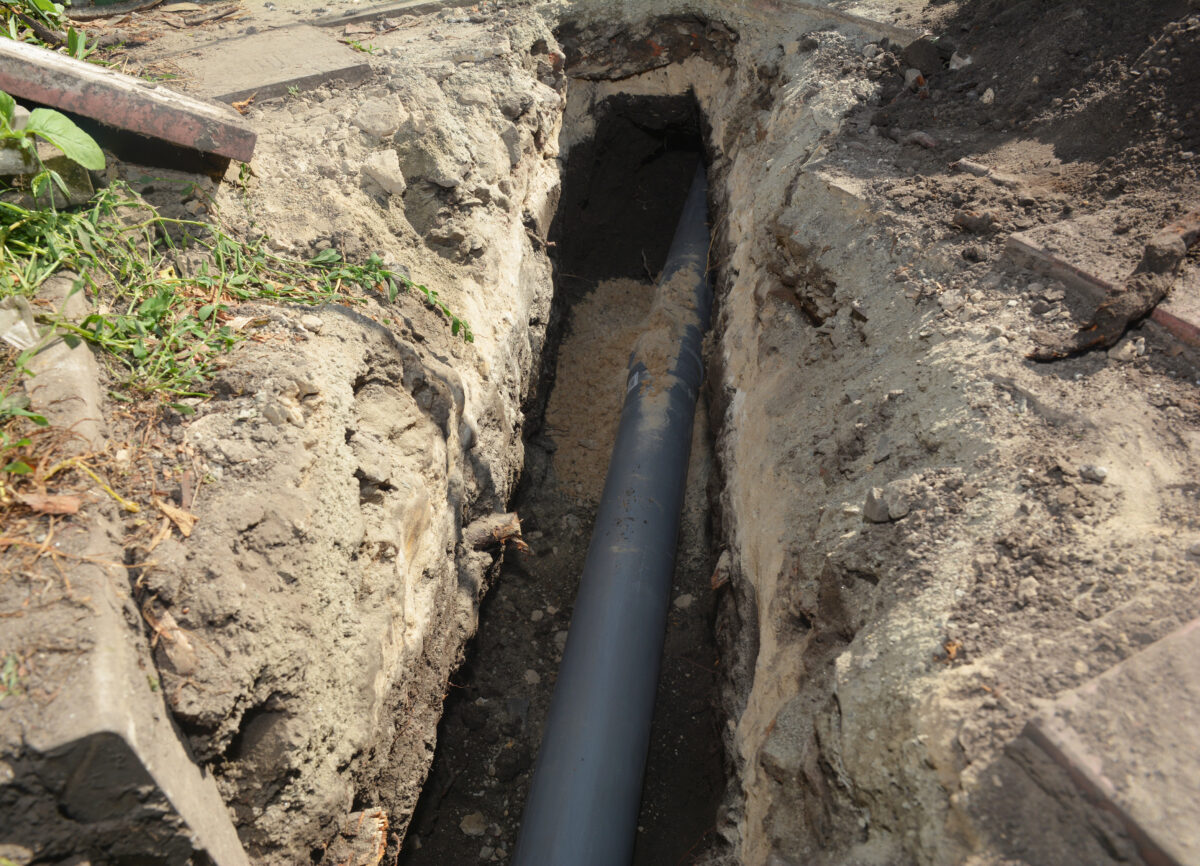
No two sewer lines are buried at the same depth, even on the same street. Several factors work together to determine where your line sits underground, and understanding them helps you make sense of any numbers a plumber gives you.
- Frost line depth: In cold climates, sewer lines must be buried below the frost line to prevent freezing. This is the single biggest factor in depth variation between northern and southern states.
- Local building codes: Every municipality sets minimum depth requirements for sewer line installation. These codes take the frost line, soil conditions, and safety into account and must be met for any permitted work.
- Slope and gravity flow: Sewer lines rely on gravity to move waste toward the municipal sewer system. A line that exits your home at a shallower depth will be progressively deeper by the time it reaches the street, following the required slope of roughly one quarter inch of drop per linear foot. Pipe diameter also plays a role, as wider pipes require slightly different slope calculations to maintain adequate flow velocity.
- Soil type: Sandy or unstable soils may require deeper installation for adequate pipe support. Dense clay soils common in parts of New England hold pipes well but can shift with freeze-thaw cycles, and clay pipes used in older installations are especially vulnerable to root intrusion and joint separation over time.
- Age of the home: Older homes were often built before current code requirements, and the existing pipe may be shallower than what would be permitted for a new sewer line installed today.
- Proximity to other utilities: Water lines, gas lines, and electrical conduits all share the underground space. Sewer lines are routed to avoid conflicts with existing utilities, which can push them deeper in developed areas.
Typical Residential Sewer Line Depths by Region
Depth ranges vary significantly across the country, primarily because of frost line differences between northern and southern states. Here is how residential sewer lines are generally buried across major U.S. regions.
| Region | Typical Sewer Line Depth | Primary Driver |
| Northeast (NH, ME, VT, NY) | 4 to 8 feet | Deep frost line, cold winters |
| Midwest (MN, WI, MI) | 4 to 8 feet | Severe frost penetration |
| Mid-Atlantic (PA, NJ, MD) | 3 to 6 feet | Moderate frost line |
| Southeast (GA, FL, SC) | 18 inches to 3 feet | Minimal frost risk |
| Southwest (TX, AZ, NM) | 18 inches to 3 feet | Little to no frost concern |
| Pacific Northwest (WA, OR) | 2 to 4 feet | Mild winters, wet soil conditions |
These are general ranges. Actual depth on any given property depends on local code, slope, and site conditions. In New Hampshire and throughout the Seacoast region, expect sewer lines to be on the deeper end of the Northeast range.
How Deep Are Sewer Lines Buried in New Hampshire
New Hampshire sits in one of the colder regions of the country, and sewer line depth requirements here reflect that. The ground freezes deeply each winter, and pipes installed above the frost line are at serious risk of freezing, cracking, and failing.
According to the New Hampshire Plumbing Code 2021, building sewers connecting to public sewers must be installed not less than 48 inches below grade, or adequately insulated to provide equivalent protection. That is a four-foot minimum, which aligns with the state’s frost line depth and reflects conditions throughout the Seacoast NH region.
In practice, many residential sewer lines in Portsmouth, Dover, Exeter, and surrounding communities sit between four and six feet below grade by the time they reach the municipal connection. Older homes may have lines installed at shallower depths under previous codes, and those lines are more likely to show problems like cracked sewer lines, tree roots growing into joints, and deteriorated pipe sections. A sewer camera inspection is always worth doing before any excavation work begins.
We’re proud to serve home and business owners in Dover, NH, and throughout the Seacoast NH and Southern Maine region with professional sewer line services, drain cleaning, and more.
How Depth Affects Sewer Line Repair and Replacement Costs
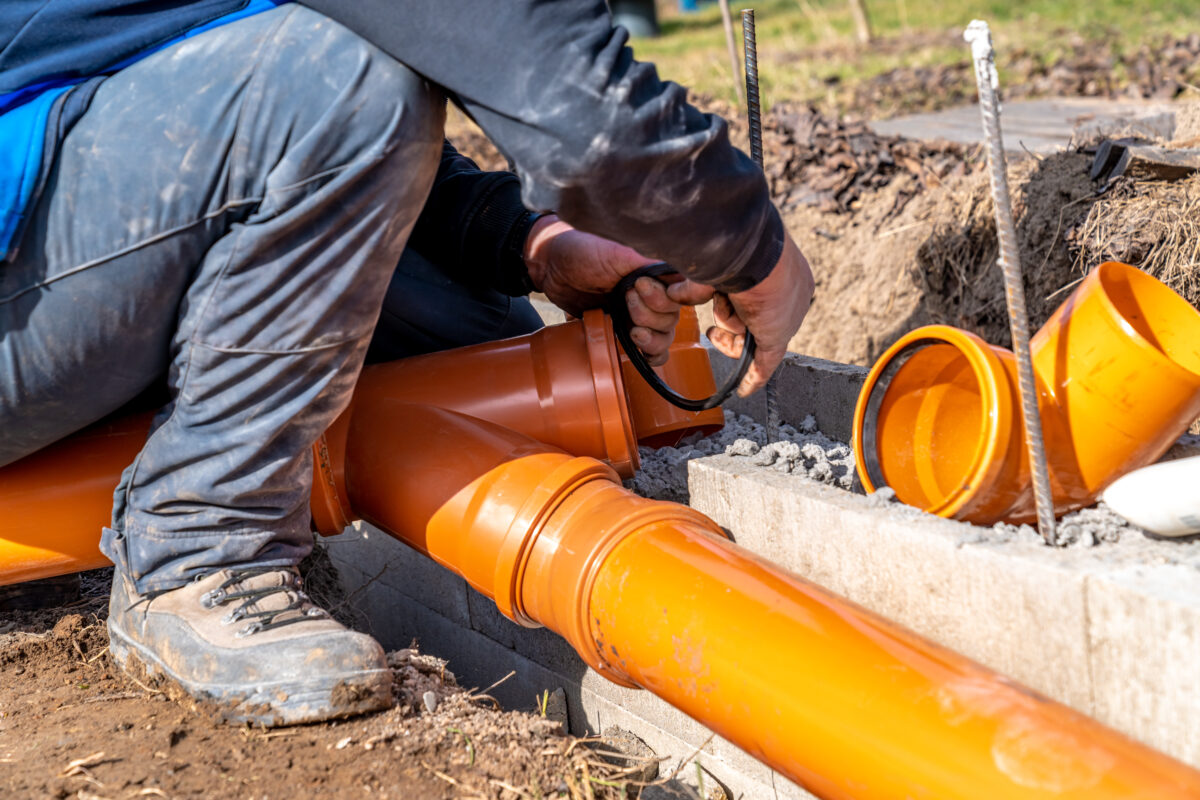
Depth is one of the most direct cost factors in any sewer line repair or replacement job. The deeper the pipe, the more excavation is required, and excavation is where a significant portion of the cost lives.
Here is how depth typically influences pricing:
- Shallow lines (2 to 3 feet): Easier and faster to excavate by hand or with small equipment. Lower labor and equipment costs. More common in older homes or in sections close to the foundation.
- Mid-depth lines (4 to 5 feet): The standard range for most Seacoast NH residential sewer lines. Requires mechanical excavation in most cases, which adds equipment cost but keeps the job manageable.
- Deep lines (6 feet or more): Require trench shoring for worker safety, heavier equipment, and significantly more excavation time. These jobs cost more and take longer regardless of the repair being made, and deep pipe collapse or collapsed pipes are among the most expensive scenarios due to the excavation required to reach and replace the damaged section.
- Trenchless sewer repair: When depth makes open excavation expensive, trenchless methods like pipe lining or pipe bursting can be a cost-effective alternative. These techniques work from access points at either end of the damaged section, eliminating or minimizing the need to dig along the full length of the line.
A sewer camera inspection before any repair work begins is the best way to confirm pipe depth, condition, and the most appropriate repair method for your specific situation.
Common FAQs About Sewer Line Depth
Sewer line depth raises practical questions for homeowners planning yard work, dealing with a repair, or trying to understand a quote from a plumber. Here are the ones we hear most often, along with direct answers.
How do I find out how deep my sewer line is?
The most reliable method is a sewer camera inspection combined with locating equipment, which allows a plumber to trace the line and measure depth at various points. Warning signs like slow drainage, slow drains throughout the house, or recurring backups are often what prompt homeowners to investigate in the first place. Property records and as-built drawings from your municipality sometimes include sewer line location and depth, though these are not always current or precise. For any excavation project, always call 811, the national Call Before You Dig service, at least a few business days in advance. It is free and required by law.
Can a sewer line be too shallow?
Yes. A sewer line installed above the frost line in New Hampshire is at high risk of freezing in winter, which can cause blockages, cracked pipe sections, and sewage backups into the home. Shallow lines are also more vulnerable to joint separation, which allows sewer gas to escape into the surrounding soil and in some cases into the home itself. Shallow lines are also more vulnerable to damage from landscaping, vehicle traffic, and surface disturbances. If a camera inspection or repair reveals that a sewer line was installed too shallow, bringing it up to current code depth is the right long-term fix.
Does depth affect how long a sewer line lasts?
Depth alone does not determine lifespan, but it influences the conditions the pipe faces. Lines buried at proper depth below the frost line avoid freeze-thaw stress, which is one of the most damaging forces on underground pipe joints and materials. Proper depth also protects against surface loading from vehicles or equipment and reduces the risk of minor root intrusion finding its way into joints. A pipe buried at code-compliant depth in good soil, made of modern PVC material, can last 50 years or more with routine maintenance.
What is the minimum depth for a sewer line in New Hampshire?
The New Hampshire Plumbing Code 2021 sets a minimum of 48 inches below grade for building sewers connecting to public sewer systems, unless the pipe is adequately insulated to provide equivalent freeze protection. This four-foot minimum is a hard requirement for any permitted sewer installation in most of the state, including the Seacoast NH region.
Does a deeper sewer line cost more to repair?
Yes, in most cases. Deeper lines require more excavation, which means more labor time, larger equipment, and in some cases trench shoring for worker safety. Emergency repairs on deep lines tend to carry the highest costs since urgency compounds the excavation challenge. A repair on a line buried four to five feet deep will typically cost more than the same repair on a line buried two to three feet deep, simply because of the additional digging involved. Homes on a septic tank system rather than a public sewer may have lines at varying depths depending on system design, which is another reason depth confirmation before any repair is essential. Trenchless repair methods can reduce the cost impact of depth by minimizing how much of the line needs to be exposed.
Kenco Plumbing and Drains: We Know What Is Under Your Yard
Sewer line depth is not something you want to guess at, and it is not something you have to. At Kenco Plumbing and Drains, we use sewer camera inspections and professional locating equipment to map what is happening underground before any work begins. We are a family-owned team serving Portsmouth, Dover, Exeter, Rollinsford, and the entire Seacoast NH and Southern Maine region, and we approach every sewer job with the same attention to detail whether it is a camera inspection or a full sewer line replacement.
If you have questions about your sewer line depth, a repair quote you received, or you are planning a project that involves digging, contact our team today and let us take a look before anything goes into the ground.