Who Is Responsible for Sewer Line Repair in NH? Homeowner vs. City
When a sewer line fails, one of the first questions homeowners ask is who is responsible for sewer line repair, the homeowner or the city. The answer can mean the difference between a call to public works and a repair bill that lands squarely on you. In New Hampshire, the rules are set town by town, so the honest answer is that it depends on where the pipe is and what your local ordinance says. This guide breaks down who owns which part of the line, how to tell whether the problem is yours, and what to do next. If you want to know what a sewer lateral repair actually involves, we cover that too.
Here is what we will cover:
- Which parts of the sewer line belong to you and which belong to the city
- Five steps to figure out who is responsible for your problem
- What homeowner responsibility means for repairs, permits, and insurance
- How septic systems change the answer
- Frequently asked questions about sewer line responsibility in NH
Who Owns Which Part of the Sewer Line?
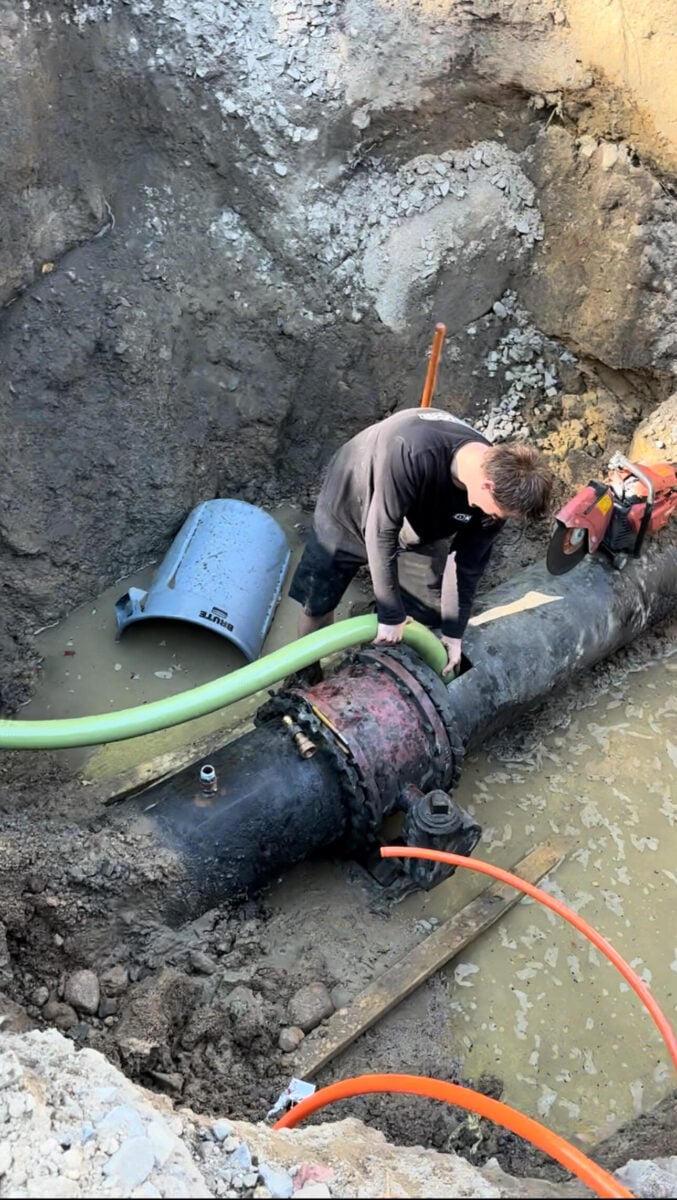
A home’s sewer system has several sections, and ownership changes as the pipe moves from your house toward the street. The general pattern is consistent across most communities: the pipe on your side belongs to you, and the large main under the street belongs to the municipality.
The tricky part is the lateral, which is the pipe that connects your home to the main. Some towns make the owner responsible only up to the property line, while others hold the owner responsible all the way to the main. In Portsmouth, for example, the city states that the property owner is responsible for the sewer lateral from the building to the main, including the connection, even though part of that pipe sits under public ground. Other cities handle the portion of the lateral that runs through the public right of way, so your own town’s rules are what count.
| Section of the Line | Who Is Typically Responsible | What to Know |
| Fixture drains and building drain inside the home | Homeowner | Includes clogs and leaks in walls, floors, and under slabs |
| Sewer lateral on your property | Homeowner | Covers breaks, root intrusion, bellies, and collapses |
| Lateral in the public right of way and the connection to the main | Varies by town | Some owners are responsible all the way to the main, others only to the property line |
| Public sewer main under the street | City or sewer utility | Typically affects several homes at once |
| Private septic system | Homeowner | Regulated by the state instead of a municipal sewer department |
How to Tell Whether the Problem Is Yours or the City’s
When sewage backs up, you need to know quickly who to call. These five steps help you sort out where the problem is and who is responsible for fixing it.
1. Check Whether Your Neighbors Are Affected
A problem in the public main usually shows up on more than one property. A problem in your lateral usually affects only your home. Asking a neighbor or two can save a lot of guesswork.
- Several homes affected: This points toward the public main, and the town should be notified right away.
- Only your home affected: This points toward your own drain or sewer lateral.
- Mixed signals: If you cannot tell, a camera inspection will settle it.
2. Find Out Where the Blockage Is
The location of the blockage matters more than how bad the backup looks. A plumber can run a camera through your cleanout and show exactly where the problem sits.
- Inside the home: Blockages in the building drain are the homeowner’s responsibility.
- On your property: Blockages or damage in the lateral are typically the homeowner’s responsibility.
- At or past the connection: If the problem sits in the main, the municipality should handle it.
3. Read Your Town’s Sewer Ordinance
Responsibility in New Hampshire is defined by local ordinance, and the wording differs between towns. Your town’s sewer use ordinance spells out where your responsibility ends.
- Where to look: Check your city or town website, or ask the public works or utilities department.
- Key language: Look for terms like building sewer, house sewer, lateral, and connection to the public sewer.
- Permit rules: Many ordinances also explain permit and inspection requirements for repairs.
4. Contact Public Works
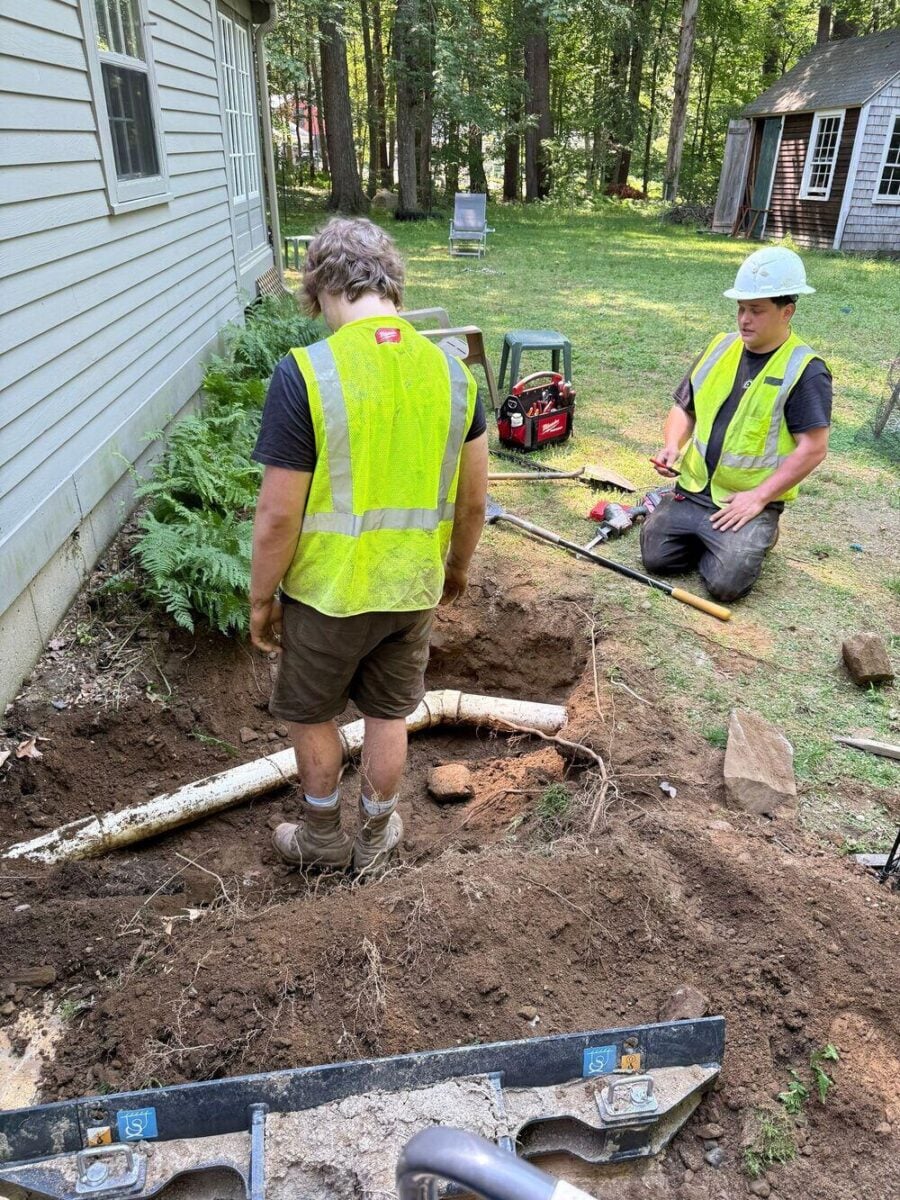
If the problem might be in the main, the municipality needs to know. Even if the issue turns out to be on your side, the call helps you confirm where the town’s responsibility starts.
- Report the backup: Give your address and describe what is happening.
- Ask about the main: Public works can tell you whether the main nearby has had issues.
- Ask about the boundary: They can explain where your responsibility begins and ends.
5. Get the Camera Inspection on Video
Video evidence of the pipe’s condition protects you in several ways. It shows where the problem is, helps you compare repair quotes, and supports any conversation with the town or your insurer.
- Location: Footage and a locator show exactly where the damage sits and how deep it is.
- Condition: The video shows cracks, roots, bellies, or collapsed sections.
- Record keeping: Keep a copy of the video and the plumber’s report.
What Homeowner Responsibility Means for Repairs
When the problem is on your side of the line, the repair falls to you, and a few practical details come with it. Knowing them ahead of time makes the process far less stressful, especially in older neighborhoods like those found in Hampton and across the Seacoast, where laterals may have been installed decades ago under different rules.
- Repair or replacement: The homeowner pays for lateral repairs, and the cost depends on the length, depth, and method used.
- Permits and inspections: Many towns require permits and inspections for work on the building sewer or its connection to the main.
- Work in the street: Excavating in the public right of way usually requires coordination with the town.
- Insurance: Standard homeowners policies often exclude sewer line damage from age or wear unless you have an added endorsement, so ask your agent about service line coverage.
- Maintenance: Regular cleaning and camera inspections catch small problems before they become expensive ones.
We’re proud to serve home and business owners in Hampton, NH, and nearby communities with sewer line repair and more.
What If You Have a Septic System?
Homes without a municipal sewer connection follow different rules. A private septic system is the homeowner’s responsibility from the house to the tank and the leach field, and the system is regulated by the state and not by a city sewer department. That means there is no municipal main to call about, and maintenance and repairs are entirely up to you.
- Pumping and inspection: Septic tanks need regular pumping and inspection to prevent failure.
- Licensed professionals: Tank and leach field work should be handled by qualified septic contractors.
- Connecting to city sewer: If a public sewer becomes available, your town may require or allow you to connect.
Common FAQs About Who Is Responsible for Sewer Line Repair
Sewer responsibility questions often come up at the worst possible time, in the middle of a backup or right after a large repair quote. Here are the ones homeowners ask us most often, along with straightforward answers.
Is the city responsible if the sewer line is under the street?
The city is responsible for the main sewer line under the street. The lateral that connects your home to that main is often the homeowner’s responsibility, sometimes all the way to the connection. Because the exact boundary varies by town, check your local ordinance or call public works to confirm.
Who pays if tree roots damage my sewer lateral?
In most cases, the owner of the lateral pays for the repair, even when the roots come from a tree outside the property. If a city tree is involved, it is worth asking public works about it before work begins. A camera inspection helps document what happened and where.
What if my home is on septic and not city sewer?
The homeowner is fully responsible for the septic system. There is no municipal sewer main involved, and the system is regulated by the state. Tank pumping, leach field repairs, and the pipe from the house to the tank are your responsibility.
Does homeowners insurance cover sewer line repair?
Standard policies typically do not cover sewer line damage caused by age, wear, or root intrusion. Some policies offer an endorsement for sewer backup or service line coverage. Review your policy and call your agent before starting work so you know what to expect.
How do I find out where my sewer line connects to the main?
A plumber can trace the line with a camera and locator and tell you how far it runs and where it ties in. Your town’s public works department may also have records of your connection. Knowing the location helps you understand where your responsibility ends.
Kenco Plumbing and Drains: Know Whose Line It Is, Then Get It Fixed
Sorting out who is responsible for a sewer line problem should not slow down the fix. At Kenco Plumbing and Drains, we start with a camera inspection, show you exactly where the problem is, and explain your options before any work begins. We are a family-owned team serving Hampton, Portsmouth, Dover, and the entire Seacoast NH and Southern Maine region, and we back our work with a one-year workmanship warranty.
If you are staring at a backup and wondering where your responsibility starts, find out exactly which part of the line is yours and request a free estimate. We offer same-day and next-day availability and financing options for larger repairs.

What Is a Sewer Line Inspection?

What Is a Sewer Line Inspection?

What Is a Sewer Line Inspection?

What Is a Sewer Line Inspection?